
A Bloody Woman
Revelation 17 portrays a corrupt religious power symbolized as a richly adorned woman who commits spiritual fornication with the kings of the earth and is identified as “Babylon the Great.” Protestants have historically understood this imagery as pointing to the Roman papal system because of its claims to universal spiritual authority, its union of ecclesiastical and political power, and its historical persecution of dissenting Christians. The woman’s association with the seven hills, her influence over earthly rulers, and her persecution of the saints were therefore seen as particularly fitting the medieval Roman Church and its papal hierarchy. History and scripture reveal this power will return and do what she has done in the past, once again in the future.
Location
Revelation 17 contains several geographical identifiers that historically point toward Rome. The woman is seated upon “seven mountains,” a striking reference to Rome’s famous seven hills. She is also called “Babylon the Great,” a name Protestants and the apostle peter (1 Peter 5:13) understood as a symbolic designation for Rome, drawing upon Babylon’s historical role as a persecuting and idolatrous power. Together with the woman’s connection to kings, political authority, and persecution of the saints, these identifiers were understood by historic Protestants as evidence that Revelation 17 ultimately points to Rome.
Union of Church and State
From a historic Protestant perspective, Roman Catholicism has traditionally been understood as teaching that civil government should recognize and support the Catholic religion rather than maintain a strict separation of church and state. The papacy historically exercised both spiritual and temporal authority, seeking cooperation between ecclesiastical and political power. In this interpretation, the Vatican flag itself portrays this union: it combines the papal keys, representing ecclesiastical authority, with the papal tiara and the sovereign insignia of Vatican City, representing temporal sovereignty. Just as the Bible portrays with Harlot and Beast.
Persecution
From the historic Protestant perspective, the Roman Catholic Church’s record of persecution is seen as a significant fulfillment of the biblical description of a power that persecutes the saints. Through institutions such as the medieval Inquisitions, church authorities investigated, imprisoned, and punished those judged to be heretics, with some cases resulting in execution by civil authorities. Protestant writers therefore pointed to the Inquisition, together with the broader history of religious persecution in Catholic Europe, as evidence of the coercive union of religious and civil power.
Identification of the Harlot
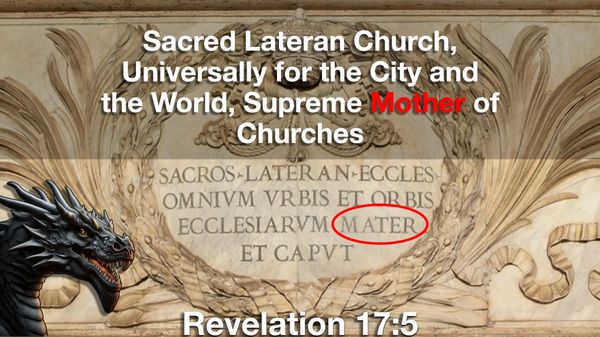
The "Mother" Church
In Bible prophecy, a woman is used symbolically to represent a church or religious community. A faithful woman represents God’s true people, while an unfaithful or harlot woman represents an apostate religious body. This symbolism is especially clear in Revelation 12, where the pure woman represents God’s faithful church, and Revelation 17, where the harlot woman represents a corrupt religious power that has departed from God’s truth.
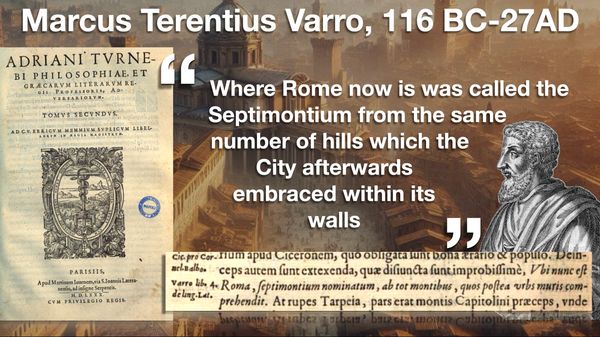
The 7 Hilled City
The Roman scholar Marcus Terentius Varro (116–27 BC) explicitly described Rome in connection with its seven hills, providing ancient evidence for the traditional identification of Rome as the “seven-hilled city.” His writings discuss Rome’s Septimontium (“seven hills” or “seven heights”), demonstrating that the association between Rome and seven hills was well established long before the book of Revelation was written.

Vatican on 7 hills?
As Rome expanded beyond its original seven hills, its later walls incorporated additional territory, including the Vatican area west of the Tiber. When the papal residence and principal seat of ecclesiastical authority shifted from the Lateran to the Vatican and St. Peter’s Basilica, the Vatican remained within the fortified boundaries of the expanded city of Rome. From a Protestant prophetic interpretation, this is significant because the papal seat remained geographically within Rome—the historic “seven-hilled city”—even as the city’s physical boundaries expanded beyond the original seven hills.
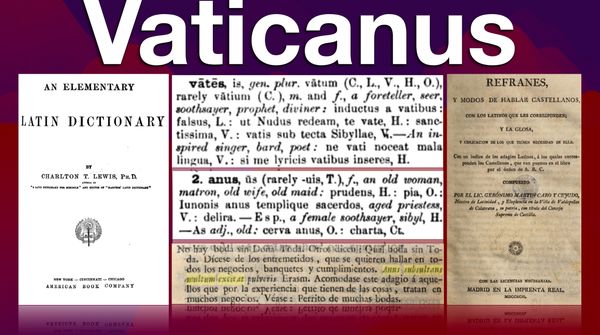
Old Woman of Prophecy
The name Vaticanus has traditionally been associated with the Latin vates, meaning a “prophet,” “seer,” or one who foretells the future, giving the Vatican name a prophetic association. This has been connected by some interpreters with the Latin proverb anus subsultans multam excitat pulveris—“an old woman dancing raises much dust”—in which anus means “old woman.” From a prophetic Protestant perspective, such Latin word associations have sometimes been viewed as suggestive of the Vatican’s prophetic significance and its identification with the Roman religious power described in Revelation.
Babylon
Cardinal James Gibbons acknowledged the traditional Christian identification of Babylon with Rome, noting that the name “Babylon” was used symbolically in the early Christian era as a designation for Rome. His recognition is significant because it demonstrates that the association of Babylon with Rome was not merely a Protestant invention, but was also acknowledged within Catholic historical and theological tradition.
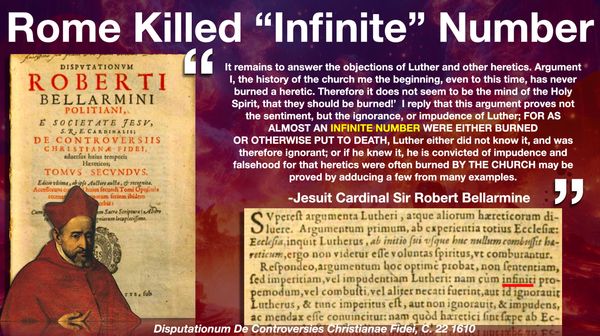
Drunk with the blood of saints
Cardinal Robert Bellarmine acknowledged that a near “infinite number” of heretics and other religious opponents had been put to death in connection with ecclesiastical authority. From the historic Protestant perspective, this admission is significant when considered alongside Revelation 17:6, where the harlot is described as “drunken with the blood of the saints, and with the blood of the martyrs of Jesus.” Protestants therefore viewed the historical record of religious persecution under papal authority as corresponding strikingly with Revelation’s depiction of a persecuting religious power.
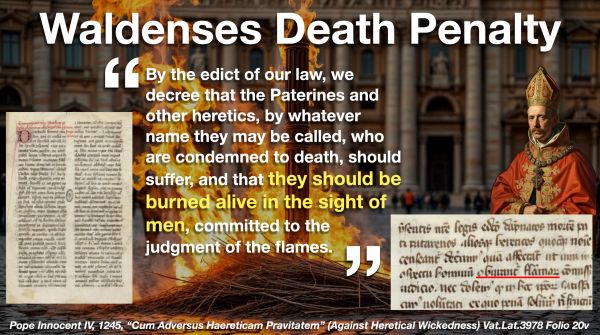
Drunk with the blood of saints
From the historic Protestant perspective, the Waldenses and other dissenting Christians were subjected to severe persecution by Catholic authorities, with many condemned as heretics and sentenced to death. Waldensian communities in particular suffered executions, imprisonment, and violent campaigns because of their refusal to submit to Catholic ecclesiastical authority. Protestants pointed to these persecutions as evidence of the coercive religious power they believed was represented by the persecuting woman of Revelation 17.
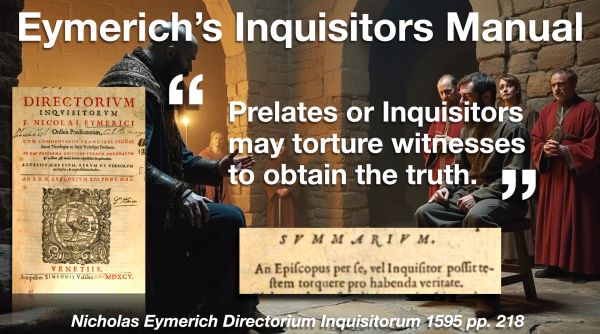
Rome's Foul Spirit
From the historic Protestant perspective, the Roman Catholic Inquisition employed imprisonment, coercive interrogation, and torture against those accused of heresy. Protestant historians pointed to these practices, along with executions carried out through cooperation between ecclesiastical and civil authorities, as evidence of the coercive methods used to suppress Protestant and other religious dissent in Catholic Europe.
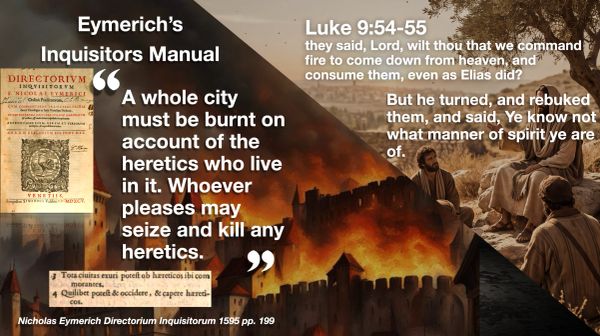
Test the Spirit. . .
From a Protestant perspective, these two passages reveal two fundamentally different spirits. In Luke 9:54–55, the disciples wanted to destroy those who rejected Christ, but Jesus rebuked them, teaching that His kingdom does not advance through coercion or destruction. By contrast, the Inquisitor’s statement presents the use of force—even death—as a means of dealing with religious dissent. Protestants therefore see a profound contrast between the Spirit of Christ, which persuades and calls sinners to repentance, and the spirit of religious coercion, which seeks to enforce belief through civil punishment and death.